
Cíntia’s passion for Popular Marches
Local tradition in Lisbon
June is, throughout the whole country, a month of very traditional and “Portuguese-style” popular festivities. In addition to the typical festivals (“arraiais”) of Santo António, São João and São Pedro that are celebrated on different days of June and in different parts of the country, this is also the time to see Popular Marches (“Marchas Populares”) take to the streets. In Lisbon, this is the high point of the festivities.
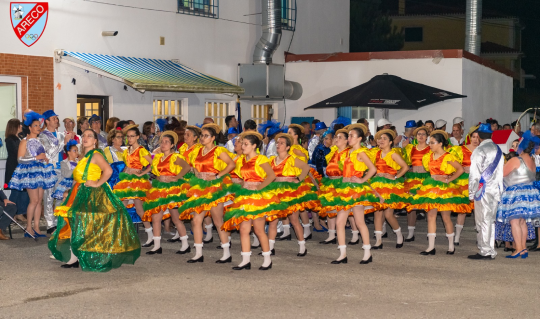
After months of work, rehearsals, fabrics and scissors and fine-tuning voices, the march can take to the streets and enchant the public with its typical songs, original and irreverent choreography, colorful and themed costumes and beautiful bows, giving the final touch to this tradition. The output of each march is an explosion of color, light, music and emotions.
And if you think that popular marches are made up only of women, or singers, or dancers, think again. The march is for men and women, for professional singers, amateurs or just shower singers, for amateur or traditional dancers, but most importantly it is for anyone who wants to have fun, get-together and share experiences and emotions. In the marches, nothing else matters, not even age, there are mascots who are not even 1 year old and can already feel the rhythm in their left foot, but also experienced marchers who are 80 (or more) years old. In marching, age is just a number.
Each performance begins, as with any show, with a backstage frenzy, clothes on one side, makeup on the other, photos and videos to remember later, and lots of glitter in the air. Next comes the favorite part of many members, a shared dinner, prepared by that day's organizing march. This snack consists of Portuguese snacks and dishes prepared in a traditional way and that delight any palate. This is also the time when all the day's marches come together, sharing stories, experiences and lots of laughs. The main purpose of these days comes next: acting. All invited marches have a small presentation parade, followed by the presentation of each of the marches. There are lots of applause, smiles (and tears, from time to time…), singing and feet tapping the rhythm. The public often has as much or more fun than us, the marchers. At the end of all the presentations and if the weather permits, the stage turns into a festival and all the marchers and the public dance among themselves to the popular songs of this typical season.
If you haven't had the opportunity to see Popular Marches live, this is my invitation because “A MARCHA É LINDA!” (The march is beautiful!).